Exploring Bushwick Brooklyn: Art, Culture, and Community
- Introduction to Bushwick’s Vibrant Energy
- A Brief History of Bushwick
- The Art That Defines Bushwick: From Walls to Galleries
- Culinary Explorations and Bushwick Eats
- Nightlife and Entertainment: Bushwick After Dark
- Community and Change: Navigating Gentrification in Bushwick
- Getting Around Bushwick
- FAQs about Bushwick
- Concluding Thoughts on Exploring Bushwick Brooklyn
Exploring Bushwick Brooklyn offers a deep dive into one of New York City’s most dynamic and rapidly evolving neighborhoods. As someone who’s spent countless hours wandering its streets, soaking in the vibrant atmosphere, I can honestly say there’s no place quite like this part of Brooklyn. It’s a place where gritty industrial history meets cutting-edge art, where diverse communities coexist (sometimes uneasily), and where every corner seems to reveal something unexpected. This isn’t just a trendy spot; the Bushwick neighborhood has a rich history and a palpable sense of creative energy that’s truly infectious.
A Brief History of Bushwick
To truly appreciate Bushwick today, you need to understand where it came from. Originally a Dutch settlement founded in 1661 named “Boswijck,” meaning “town in the woods,” this Brooklyn area was initially farmland. Over centuries, it transformed into a bustling industrial hub, known particularly for its breweries in the late 19th and early 20th centuries – earning it the nickname “Beer Capital of the Northeast.”
However, like many industrial areas in New York, Bushwick faced decline in the mid-20th century, exacerbated by economic hardship and events like the devastating blackout of 1977, which led to widespread looting and fires. In the latter part of the 20th century, it became a predominantly Black and Puerto Rican neighborhood. Fast forward to the late 20th and early 21st century, and Bushwick began its latest transformation, drawing artists and young professionals seeking affordable space, mirroring trends seen in nearby Williamsburg.
The Art That Defines Bushwick: From Walls to Galleries
Mention Bushwick, and for many, the first thing that comes to mind is the incredible street art. The Bushwick Collective, an outdoor gallery centered around Troutman Street and St. Nicholas Avenue, is world-renowned. Here, massive murals cover the sides of warehouses, constantly changing as artists from around the globe contribute their work. It’s an ephemeral museum – blink, and you might miss a masterpiece! Walking through this area feels like stepping into a vibrant, ever-evolving canvas.
But the art scene in this Brooklyn area isn’t confined to the outdoors. Converted industrial spaces are now home to numerous galleries and artist studios. Places like the BogArt building on Bogart Street house multiple galleries under one roof, fostering a strong sense of artistic community. You can find everything from minimalist contemporary work to experimental pieces. My experience visiting these galleries has always been one of discovery, seeing emerging artists alongside more established names. Some notable galleries include NURTUREart (a non-profit supporting emerging artists), Storefront Ten Eyck, and Robert Henry Contemporary.

This image is a fictional image generated by GlobalTrendHub.
Culinary Explorations and Bushwick Eats
Bushwick’s transformation has also brought an explosion of diverse culinary options. From long-standing bodegas serving up delicious Latin American fare to trendy new restaurants, the food scene is a reflection of the neighborhood’s diverse population and evolving character.
If you’re looking for iconic Bushwick eats, Roberta’s is practically a pilgrimage site for pizza lovers, known for its wood-fired pies and bustling garden. But venture further, and you’ll find hidden gems offering everything from authentic Mexican tacos at places like Los Hermanos to innovative Vietnamese at Bunker, or Ethiopian at Bunna Cafe. There are also cozy cafes perfect for a midday coffee break or a casual brunch. The variety here is astounding, offering something for every palate and budget.
Nightlife and Entertainment: Bushwick After Dark
When the sun goes down, Exploring Bushwick Brooklyn takes on a different energy. The neighborhood has become a major destination for nightlife, inheriting some of the mantle from its neighbor, Williamsburg. Warehouses that once housed factories now thump with music, hosting everything from underground rave parties to live music venues and vibrant dance clubs.
House of Yes is perhaps the most famous example, known for its elaborate themed parties and performance art. Elsewhere is another popular spot for live music and dancing. Beyond the larger venues, countless smaller bars and pubs offer a more laid-back atmosphere, serving craft beers and inventive cocktails. It’s a nightlife scene that feels authentic and unpretentious, attracting a diverse crowd.
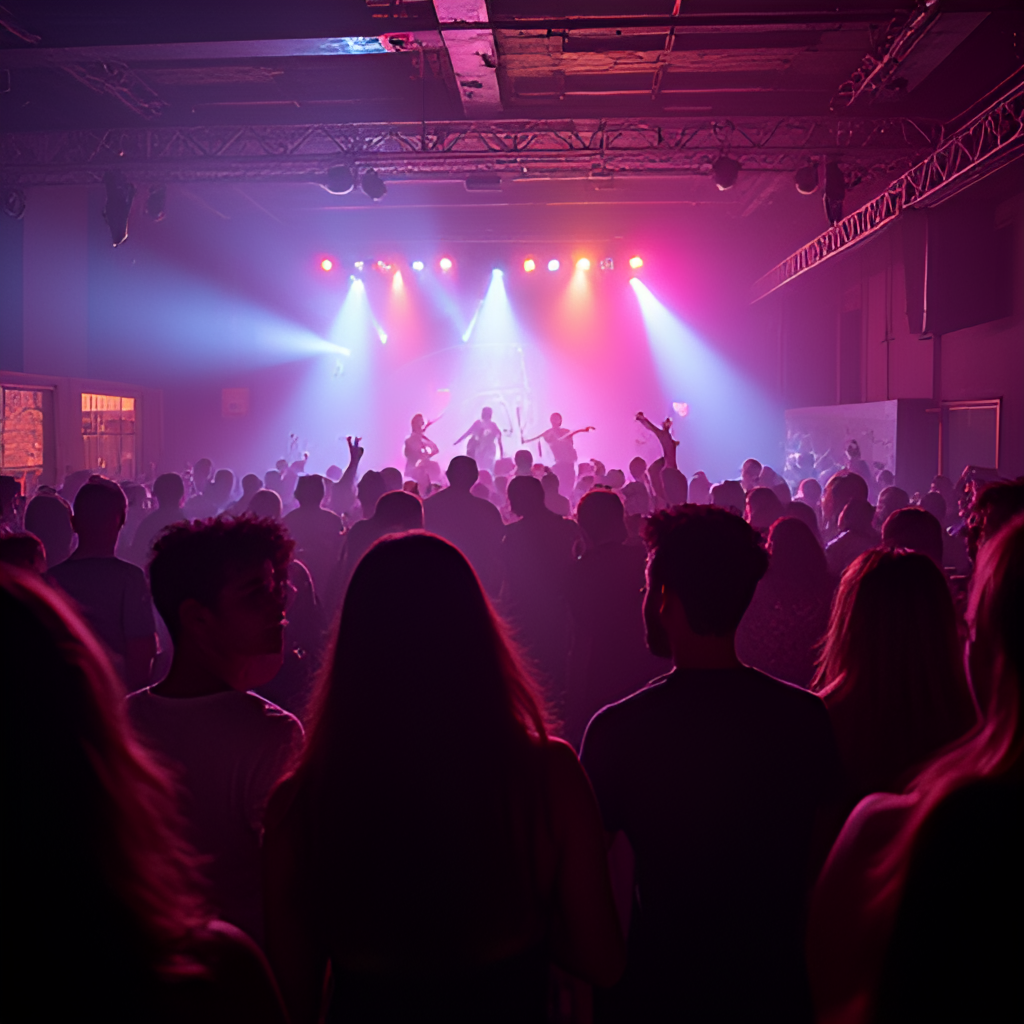
This image is a fictional image generated by GlobalTrendHub.
Community and Change: Navigating Gentrification in Bushwick
No discussion of Bushwick would be complete without acknowledging the complex issue of gentrification. As artists and new residents have moved in, drawn by the neighborhood’s character and relatively lower rents compared to Manhattan or other parts of Brooklyn, property values and rents have risen dramatically. This has led to the displacement of some long-term, working-class residents, many from the established Latino community.
It’s a sensitive topic, and the changes are visible on the streets – new luxury buildings stand alongside older housing stock and industrial spaces. There are community organizations working to address these challenges, advocating for affordable housing and supporting existing residents and businesses. Groups like RiseBoro Community Partnership and Make the Road New York play vital roles in the Bushwick neighborhood, providing services and organizing for the community’s future.
Witnessing this evolution firsthand has been both fascinating and concerning. It’s a reminder that urban development is rarely simple and often comes with significant social costs. Balancing growth with the preservation of community character and affordability is an ongoing struggle here.
Getting Around Bushwick
Getting to and around Bushwick is relatively easy, primarily thanks to the L and M subway lines. The L train has several stops throughout the neighborhood (like Morgan Ave, L Train, Jefferson St, and DeKalb Ave), making it convenient for exploring the core areas. The M train also serves parts of Bushwick.
- By Subway: The L and M trains are your best bet.
- By Bus: Several bus lines also run through Bushwick, connecting it to other parts of Brooklyn and Queens.
- Walking: Many of the key attractions, particularly the street art and galleries, are best explored on foot. Wear comfortable shoes!
- Biking: Bushwick is bike-friendly, and you’ll see many residents getting around on two wheels. Citi Bike stations are also available.
While navigating the L train is usually straightforward for Exploring Bushwick Brooklyn, be mindful of service changes, especially on weekends.
FAQs about Bushwick
Here are some common questions people ask about this vibrant Brooklyn area:
- Is Bushwick safe?
- Like any large urban neighborhood, safety can vary by area and time of day. It has seen improvements over the years, but it’s always wise to be aware of your surroundings, especially late at night. Stick to well-lit, populated streets.
- What is the best time to visit the Bushwick Collective?
- Daytime is best for seeing the art in natural light. Weekends can be busier. Visiting during the annual Bushwick Collective Block Party in June is a unique experience, though expect large crowds.
- Is Bushwick expensive?
- Rents and property values have increased significantly due to gentrification, making it less affordable than it once was. However, it can still be relatively less expensive than some other parts of North Brooklyn like Williamsburg.
Concluding Thoughts on Exploring Bushwick Brooklyn
Exploring Bushwick Brooklyn is an experience that engages all the senses. It’s a place of incredible artistic expression, diverse culinary delights, and a vibrant nightlife. But it’s also a neighborhood grappling with the realities of rapid change and the need to preserve its unique identity and community ties. As someone who’s witnessed its evolution, I find myself continually drawn back to see what’s new, what’s stayed the same, and how the community continues to shape its future. Whether you’re an art lover, a food enthusiast, or simply curious about one of NYC’s most dynamic neighborhoods, exploring Bushwick Brooklyn is an adventure worth taking.
For further reading on Bushwick’s history and transformation, check out the Bushwick Daily website for local news and stories. You can also learn more about the history of New York’s Dutch settlements, including Bushwick, at the New-York Historical Society website.
And if you’re interested in supporting local community efforts, consider looking into organizations like RiseBoro Community Partnership.